
The "Default Male" Problem: Why Endurance Science is Failing Women


For decades, the blueprint for endurance success—the intervals, the tapering strategies, and the fueling protocols—has been built on a foundation of data derived almost exclusively from men. If you are a female runner, cyclist, or triathlete, there is a high statistical probability that the training plan you are following was designed for a body that doesn't share your hormonal profile or physiological baseline.
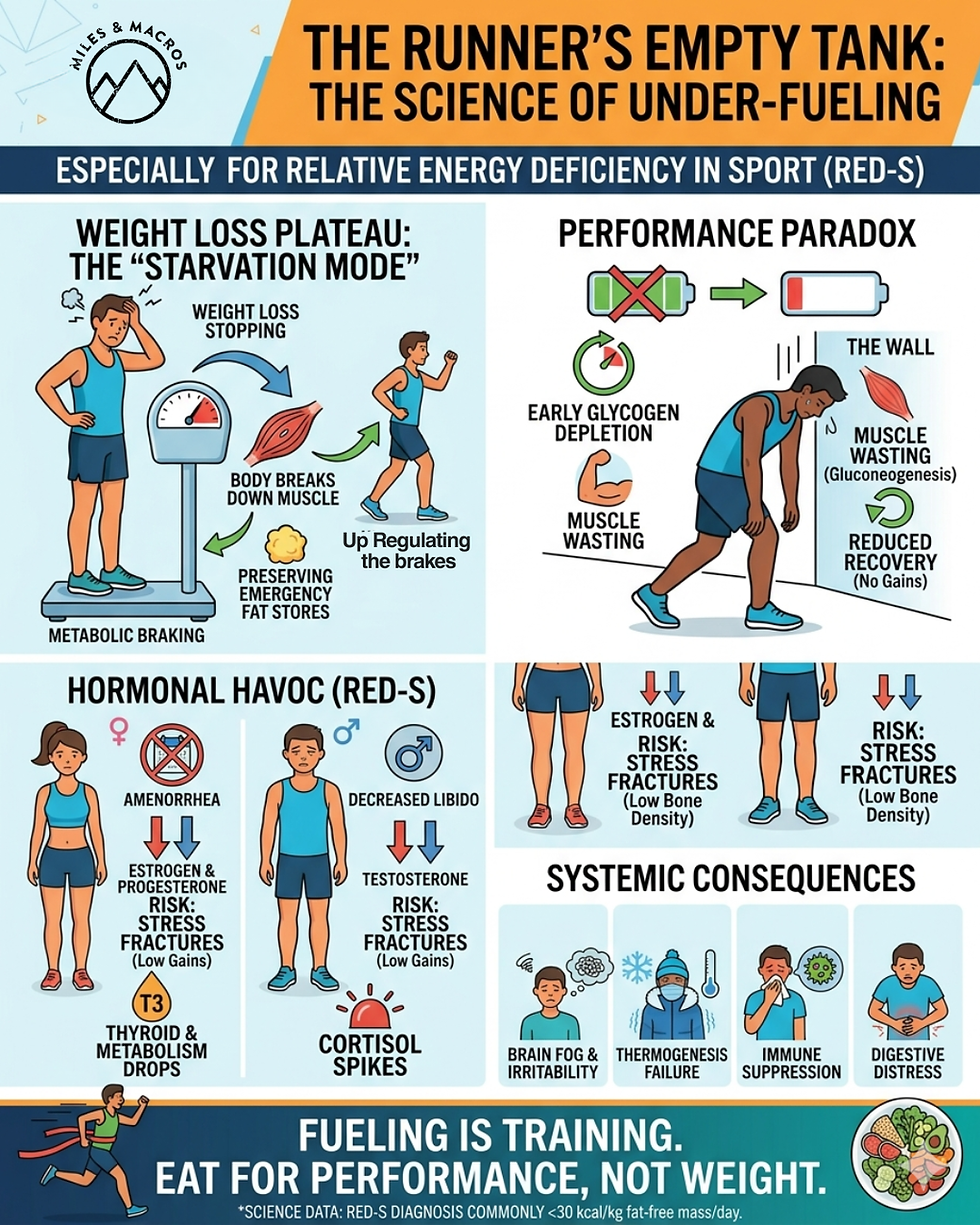
The gap in sports science isn't just a matter of academic interest; it’s a performance barrier. When we apply male-centric data to female athletes, we risk everything from stalled progress to bone stress injuries and RED-S (Relative Energy Deficiency in Sport).
Understanding why this gap exists, and how we are finally beginning to bridge it, is essential for any athlete or coach looking to optimize female performance.
1. A History of Exclusion: The "Standard" Subject
In the early days of exercise physiology, the goal was to establish "universal" truths about human performance. However, "human" was often synonymous with "male."
Foundational studies in the mid-20th century—those that defined our understanding of lactic threshold and aerobic capacity—recruited male soldiers or university students. Women were often barred from these studies under the guise of "protection." Researchers cited concerns over reproductive health or the potential "fragility" of the female frame.
Even as women entered the competitive arena in droves during the 1970s and 80s, the research didn’t catch up. A landmark review by Costello et al. (2014) found that in major sports medicine journals, women made up only about 39% of total participants. When looking specifically at studies on performance enhancement, that number dropped even further.
The "Too Complex" Fallacy
The most common excuse for excluding women has been the menstrual cycle. Researchers argued that fluctuating levels of estrogen and progesterone created too much "noise" in the data. To achieve a clean, linear result, it was easier to study men, whose hormonal profiles are relatively stable over a 24-hour cycle.
This created a scientific paradox: women were excluded because their physiology was "too complex," yet the resulting "simple" data was then applied back to those same complex women as if it were a perfect fit.
2. The Menstrual Cycle: The Great Research Gap
For a long time, the advice given to female athletes was: “Just train through it.” But as any endurance athlete knows, the physiological environment of a high-hormone phase (luteal) is vastly different from a low-hormone phase (follicular).
The Quality Crisis
Recent meta-analyses, such as those by Elliott-Sale et al. (2020), have highlighted that while we have some data on the menstrual cycle, much of it is poor quality. Many studies:
Have very small sample sizes (often fewer than 10 participants).
Fail to verify hormonal phases with blood tests, relying instead on "calendar counting."
Group naturally cycling women with those on various types of hormonal contraceptives.
Because of these flaws, we see conflicting results. Some studies suggest a performance dip in the heat during the luteal phase (due to a higher basal body temperature), while others show no significant difference. This lack of clarity leaves coaches guessing, often leading to a "one-size-fits-all" approach that ignores the individual variability of the cycle.
3. Rethinking VO₂max and Aerobic Norms
The gold standard of endurance fitness is VO₂max (maximal oxygen uptake). However, the very metrics we use to define "elite" status were calibrated on male physiology.
Physiological Divergence
There are real biological differences that influence aerobic capacity, and they aren't "deficits"—they are simply different bas
elines:
Heart Size: Women generally have smaller left ventricles, resulting in a smaller stroke volume.
Hemoglobin Levels: Due to menstruation and lower testosterone, women typically have lower hemoglobin concentrations ($12–14\text{ g/dL}$ vs. $14–16\text{ g/dL}$ in men), which affects oxygen-carrying capacity.
Body Composition: Healthy female athletes naturally carry a higher percentage of essential body fat for endocrine function.
When we use training models built on male data, we often overlook how women utilize fuel. Evidence suggests that women are actually better fat-oxidizers at moderate intensities than men. By forcing women into "male" fueling or pacing zones, we may be negating a natural endurance advantage.
4. The Real-World Consequences for Athletes
Why does this data gap matter on a Tuesday morning track session? Because misapplied science leads to physical breakdown.
Misapplied Training Zones
Training zones (Zones 1–5) are often calculated based on percentages of max heart rate or functional threshold power (FTP). However, the "crossover point" where an athlete shifts from burning primarily fat to primarily carbohydrates can differ by sex and cycle phase. A "Zone 2" ride for a man might be a "Zone 3" effort for a woman in her late luteal phase when her heart rate is naturally elevated.
The Fueling Trap
Most sports nutrition guidelines were developed by testing male gut absorption. Women have different gastric emptying rates, particularly during certain phases of the cycle. Furthermore, the risk of RED-S is significantly higher in women. When we follow "lean" male-centric racing weights, women often fall into a caloric deficit that triggers hormonal shutdown, leading to bone stress fractures and amenorrhea (loss of period).
Important Note: A lost period is not a sign of "peak fitness"; it is a sign of physiological failure.
5. Where the Science is Improving
The tide is finally turning. We are moving away from the idea that women are "small men" and toward a sex-specific paradigm.
Standardized Protocols: Researchers are now calling for "triple-lock" verification (blood tests, ovulation kits, and temperature tracking) to ensure menstrual phase accuracy in studies.
Increased Funding: Organizations like the Female Athlete Health Group and various university initiatives are prioritizing female-only cohorts.
The Power of Big Data: Apps and wearable tech are allowing researchers to collect "wild" data from thousands of female runners, providing a clearer picture of how training loads interact with the menstrual cycle in the real world.
Practical Takeaways for Athletes and Coaches
To bridge the gap between current science and your own performance, consider these steps:
Track Everything: Don't just track miles; track your cycle. Use apps or journals to note how you feel, your perceived exertion (RPE), and your recovery across the month.
Individualize the "Rule of Thumb": If a training plan feels "off" during a specific week of your cycle, adjust it. Research by McNulty et al. (2020) suggests that while there may be a small reduction in performance during the early follicular phase, the individual variation is massive.
Prioritize Protein and Strength: Women typically need higher protein intake (especially leucine) to trigger muscle protein synthesis compared to men, particularly as they age or enter perimenopause.
Demand Better Data: Coaches should look for research that specifies the sex of the participants. If a study on "runners" only used men, take its conclusions with a grain of salt for your female athletes.
Conclusion: Toward a More Inclusive Finish Line
The historical exclusion of women from sports science was a shortcut that hindered our understanding of human potential. By acknowledging that women are not "too complex" to study, but rather "too important" to ignore, we can move toward a future where training plans are as precise as the athletes who follow them.
The goal isn't just to close the data gap—it's to unlock the next generation of female endurance performance.
Would you like me to create a sample "Cycle-Syncing" training template based on current (though emerging) recommendations for endurance runners?


Comments